
How to play
Five minutes from the dock to your first broadside. The fleet, who beats whom, and how a round works when every captain moves at once.
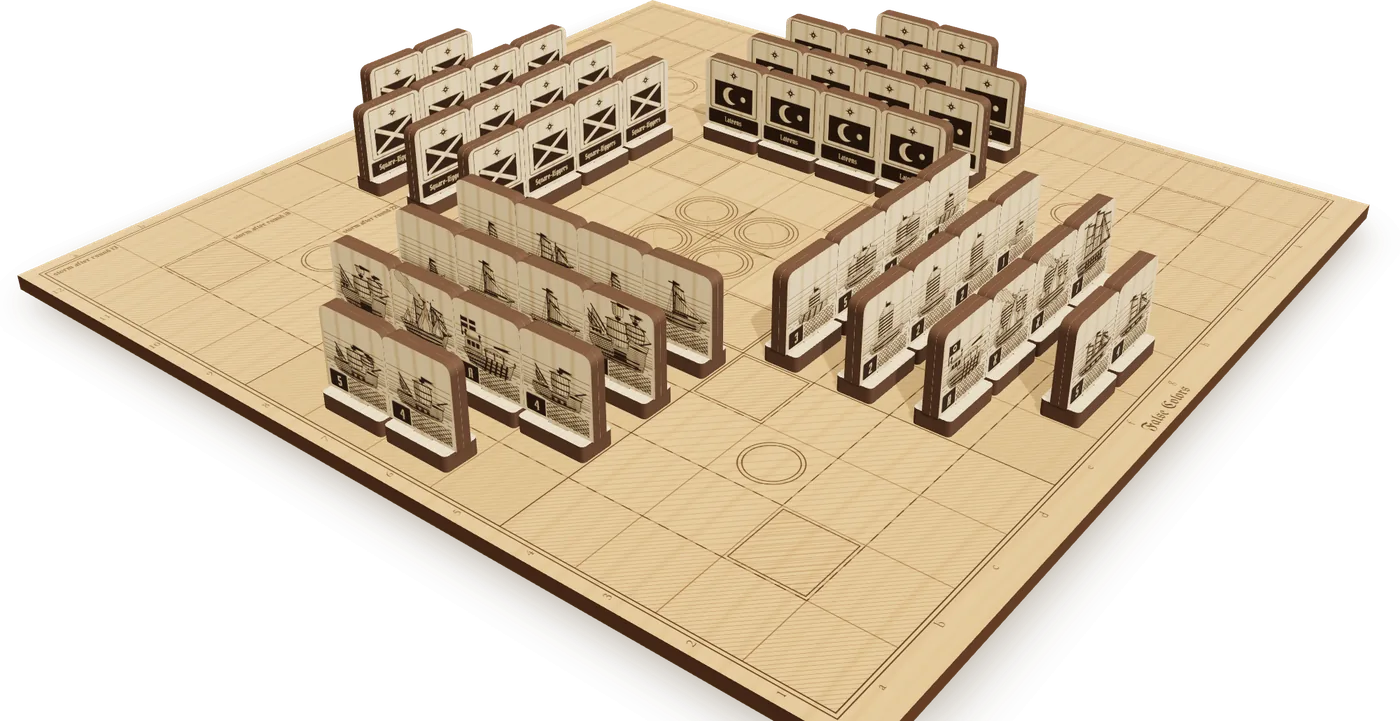
Fourteen ships, nine kinds.
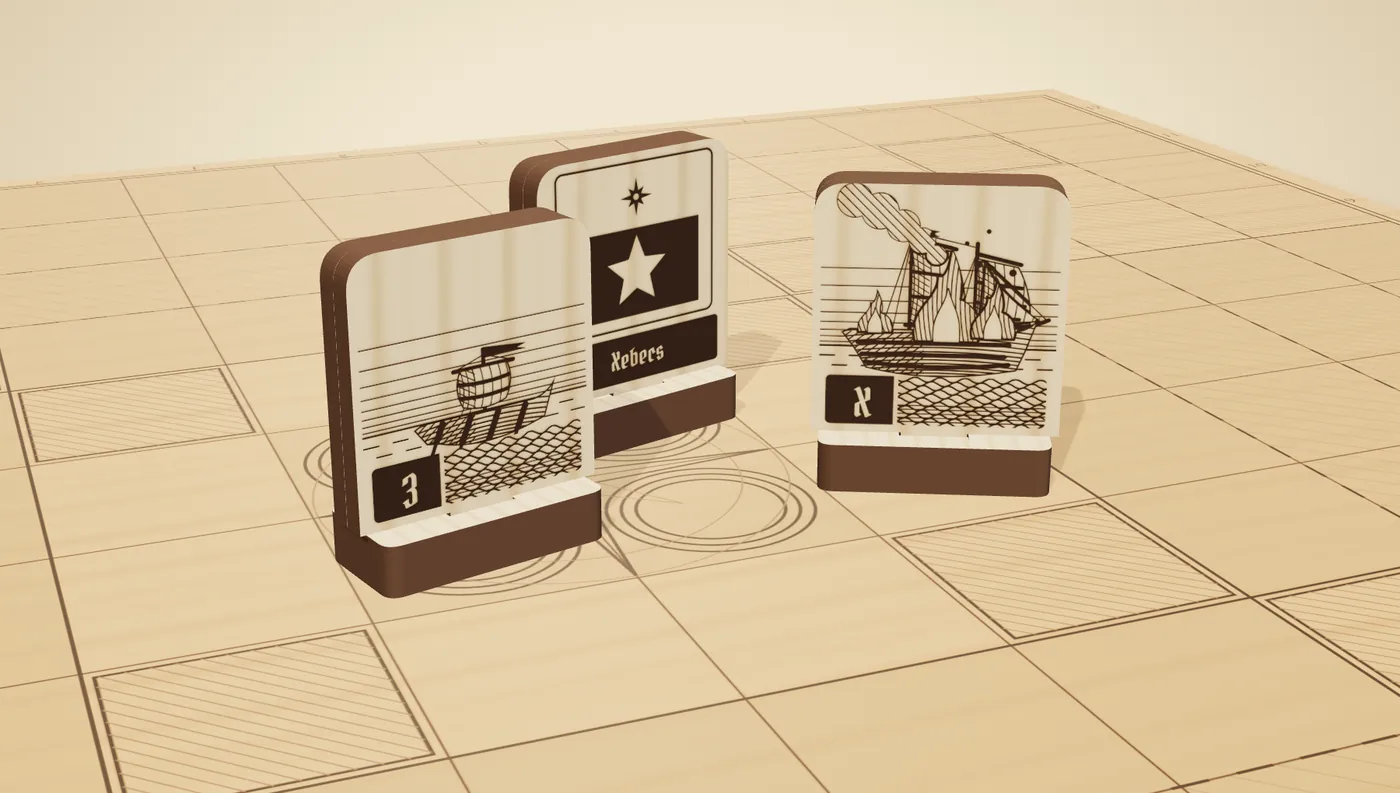
Every captain sails the same 14. The number on a ship is her rating, and it faces only you: your rivals see a hull and a flag. Most ships sail one cell a round along a row or column, never diagonally.
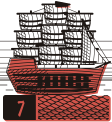 7First Rate1 in the fleetsails 1 cell
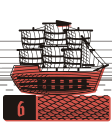 6Ship of the Line1 in the fleetsails 1 cell
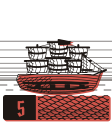 5Frigate1 in the fleetsails 1 cell
 4Sloop2 in the fleetsails 1 cell
 3Boarding Party2 in the fleetsails 1 cell
 2Cutter3 in the fleetup to 3 in a line
 1Privateer1 in the fleetsails 1 cell
 XFireship2 in the fleetnever moves
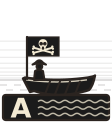
 AAdmiral1 in the fleetsails 1 cell
The Cutter is the scout. She sails up to 3 cells in a straight line through open water and may strike at the end of her run, or she may stay put and turn her spyglass on an enemy beside her.
An Admiral is your flagship and your weak point. She sails like any other ship but never attacks, and keeping her afloat is worth points at the end. Set her up where a raider will not guess.
Pick a fight.
The bigger rating wins, and equal ratings sink each other. Choose an attacker and a defender to see who wins.
The three exceptions
-
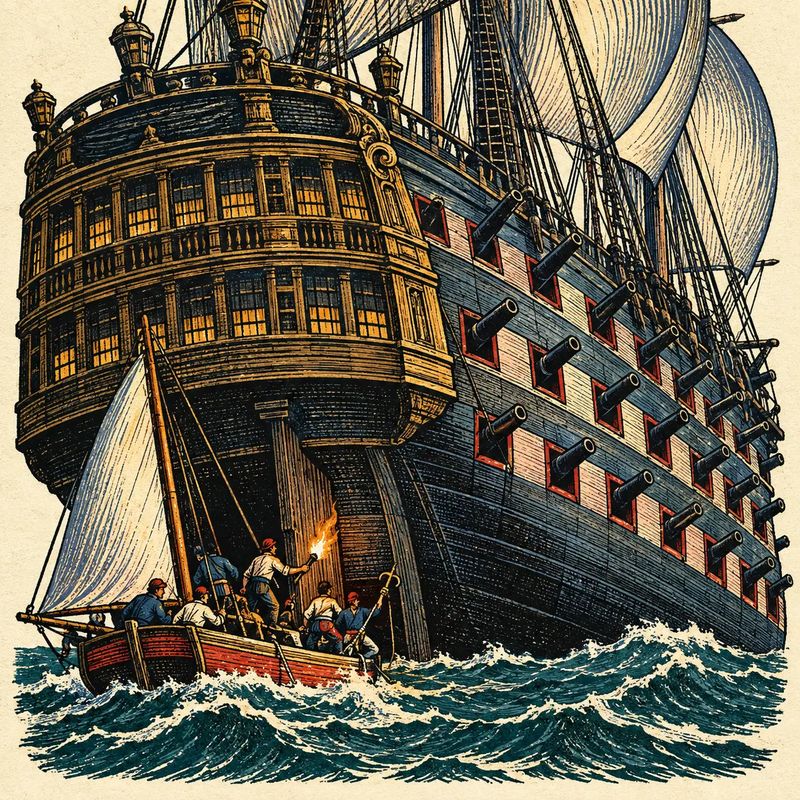
The Privateer sinks a First Rate, but only when the Privateer attacks. Wait for her and she is just a 1.
-
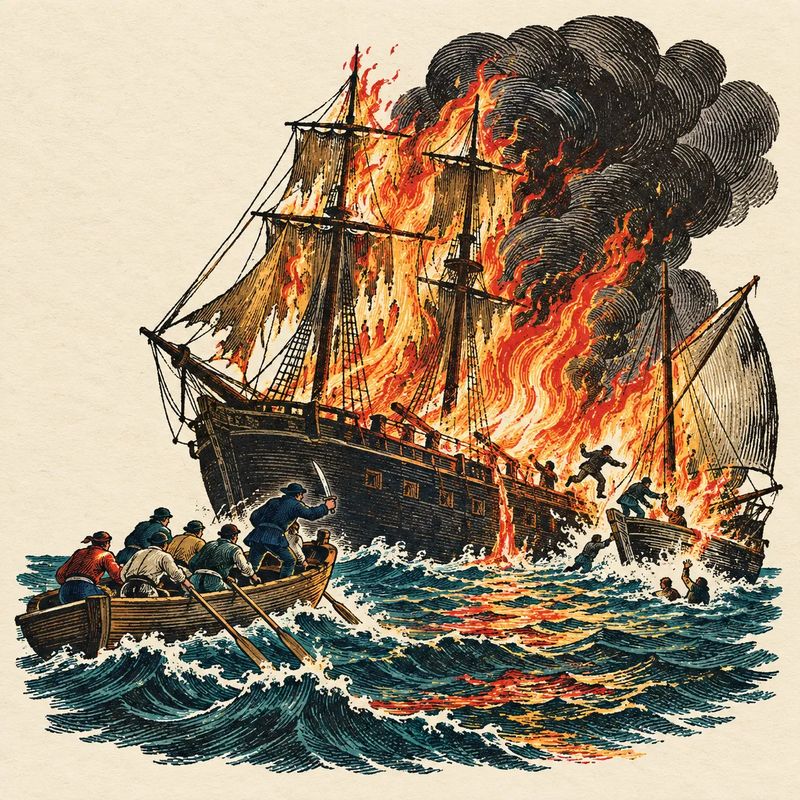
The Fireship never moves and burns any ship that attacks her, except a Boarding Party, which takes her.
-
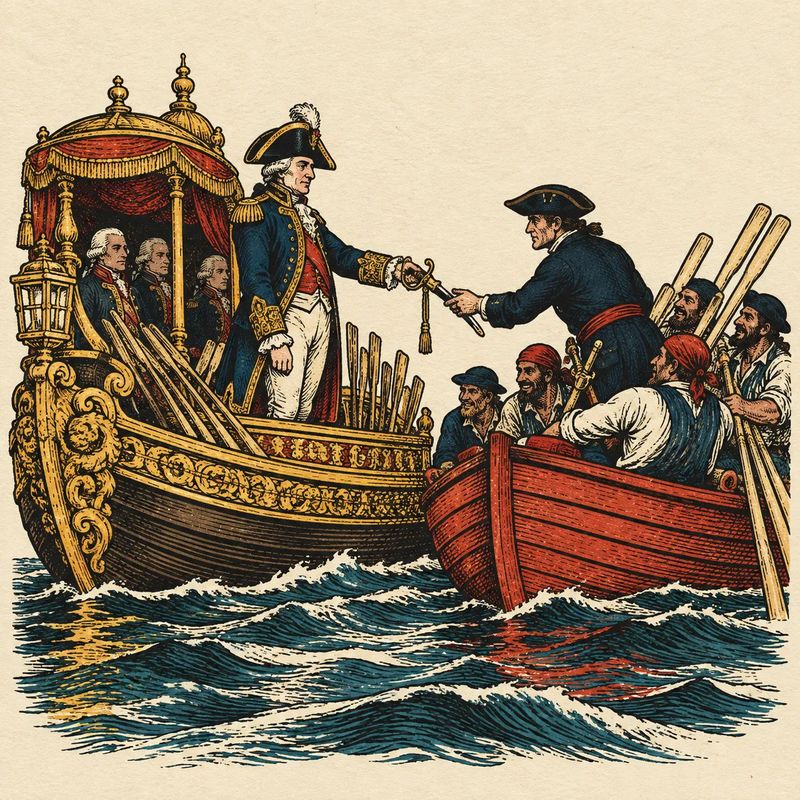
An Admiral never attacks, and any ship that reaches her captures her: 8 points to the captor.
One round, step by step.
Nobody waits for a turn. Every captain plans in secret, and every fleet sails at the same moment.
Write your orders
Choose up to 3 ships, or 4 while your Admiral is afloat, and give each one order: move, spyglass or hold. Any ship without an order holds.
Reveal them together
At a table, every captain turns their slip over at once. Online, the round waits for the last captain's orders, and your phone can tell you when yours are due.
Sail
Spyglasses look first. Then every ship moves at the same moment, and ships that meet fight.
Score
Count the harbors and the Capital, move the round marker on, and let the storm take its ring when its round comes.
When ships meet
Because everyone moves at once, courses cross. Four cases cover every meeting.
Every fleet sails at once, captain. Steer for where the enemy will be, not where she is.
Ships of one side never fight. A ship may even sail onto a friend's cell: if the friend sails away she follows in behind, and if not she holds.
No shuffling. A ship that has gone back and forth between the same two cells for 3 rounds running may not go back again. The game tells you why an order is refused.
What each captain sees.
- Your ships face you
- On the table every ship stands with her rating toward her own captain and her flag toward everyone else. On a screen, a ship you have not seen fight is a plain hull in her fleet's colours.
- A fight is private
- Both ships are shown only to the two captains in it, and to their partners. Everyone else learns where the fight was and which ships were struck.
- The spyglass
- Instead of moving, a Cutter beside an enemy ship may look at her. You learn her rating, her captain learns which Cutter looked, and nobody else learns anything.
- Scores in Open Water
- When three or more captains each sail alone, you see your own score and a single word for each rival: leading, close (within 5 of the leader) or trailing.
- Partners
- In a team game partners see each other's ships and orders, unless the table plays Sealed Orders, where each sees only what the other has learned.
Points, then the storm.
Points come from holding water, not from body counts. And the chart shrinks: after rounds 13, 18, 22 the storm takes the next ring, and any ship still out there is lost.
- 1
- for each harbor one of your ships stands on at the end of a round
- 2
- for the side with the most ships on the Capital at the end of a round; a tie scores nothing
- 8
- for capturing an enemy Admiral
- ½
- of a ship's rating, rounded down, for sinking her in a fight
- +4
- for your own Admiral afloat when the game ends
- −8
- if your Admiral is lost without being captured, to the storm or by meeting another Admiral; she is then shown to everyone
The storm takes every ship left on the outer ring. I do not swim, captain.
No stalling. If 6 rounds pass with no fight and no harbor changing hands, every storm ring still three or more rounds off closes a round early.
A tie on points goes to the side that held more harbors in the last round, then to the side that sank more enemy strength. Failing both, the win is shared.
Four ways to win.
The host chooses the ending before the game. Classic is the default, and the one the browser game plays.
- Classic
- The most points after 24 rounds wins. A side that captures every enemy Admiral wins at once, whatever the points.
- Last Admiral afloat
- A captain whose Admiral is captured or lost leaves the board with the whole fleet. The last side with an Admiral afloat wins.
- Capture the flag
- The first side to capture an enemy Admiral wins at once. It is usually played without harbor points and with a storm that starts late, so a chase cannot run forever.
- Hold the Capital
- Hold the Capital for 2 rounds running: every cell of it with two sides, most of it with three or more.
Unless the host lifts the round limit, points decide any game that reaches it.
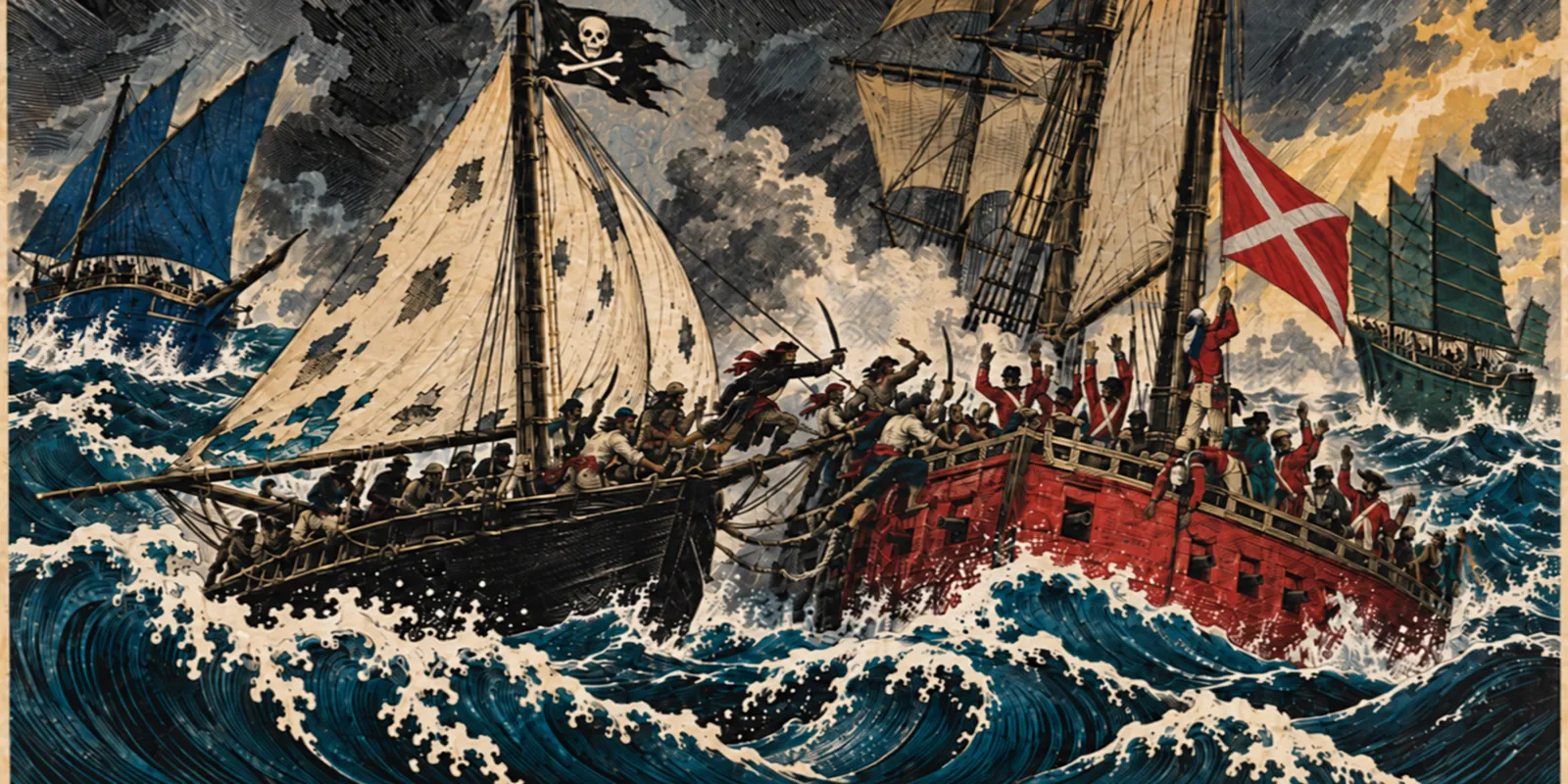
 Pirates!
One captain hoists the black flag. Everyone else sails as one alliance of navies.
- The pirate sails the Buccaneers, a seventh fleet with black hulls and bone-white sails.
- Board, don't sink. When a pirate ship attacks and wins, she takes the beaten ship as a prize. The prize turns black, her rating is shown to everyone, and her new crew needs a round before she sails.
- Sell the prize. A prize brought onto a harbor or the Capital is sold for her rating. That is plunder, the only thing the pirate scores.
- The pirate wins with 12 plunder on the square chart, or 9 on the hex chart.
- The navies win by taking the pirate's Admiral. The first time she is beaten she slips away in a gig; the next time she is taken. A navy ship that beats a prize takes her back.
- The pirate gives 4 orders a round, one more while her Admiral is afloat, and holds at most 4 prizes at once.
Three navies hunt the pirate on the square chart, two to five on the hex chart.

Three charts.
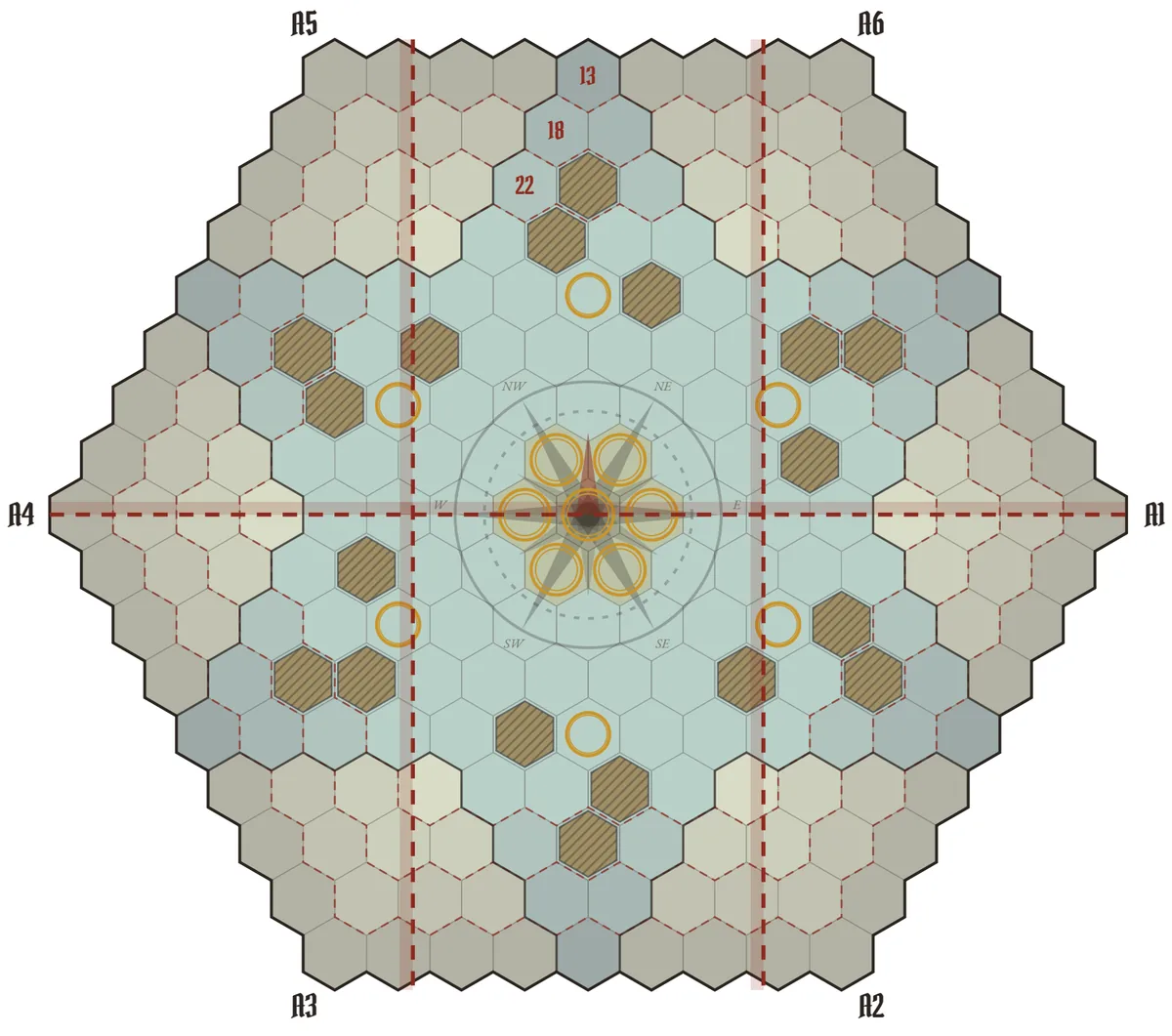
Each one prints at home on letter paper. These are the assembly pages from the print kit; the big numbers show which sheet goes where.
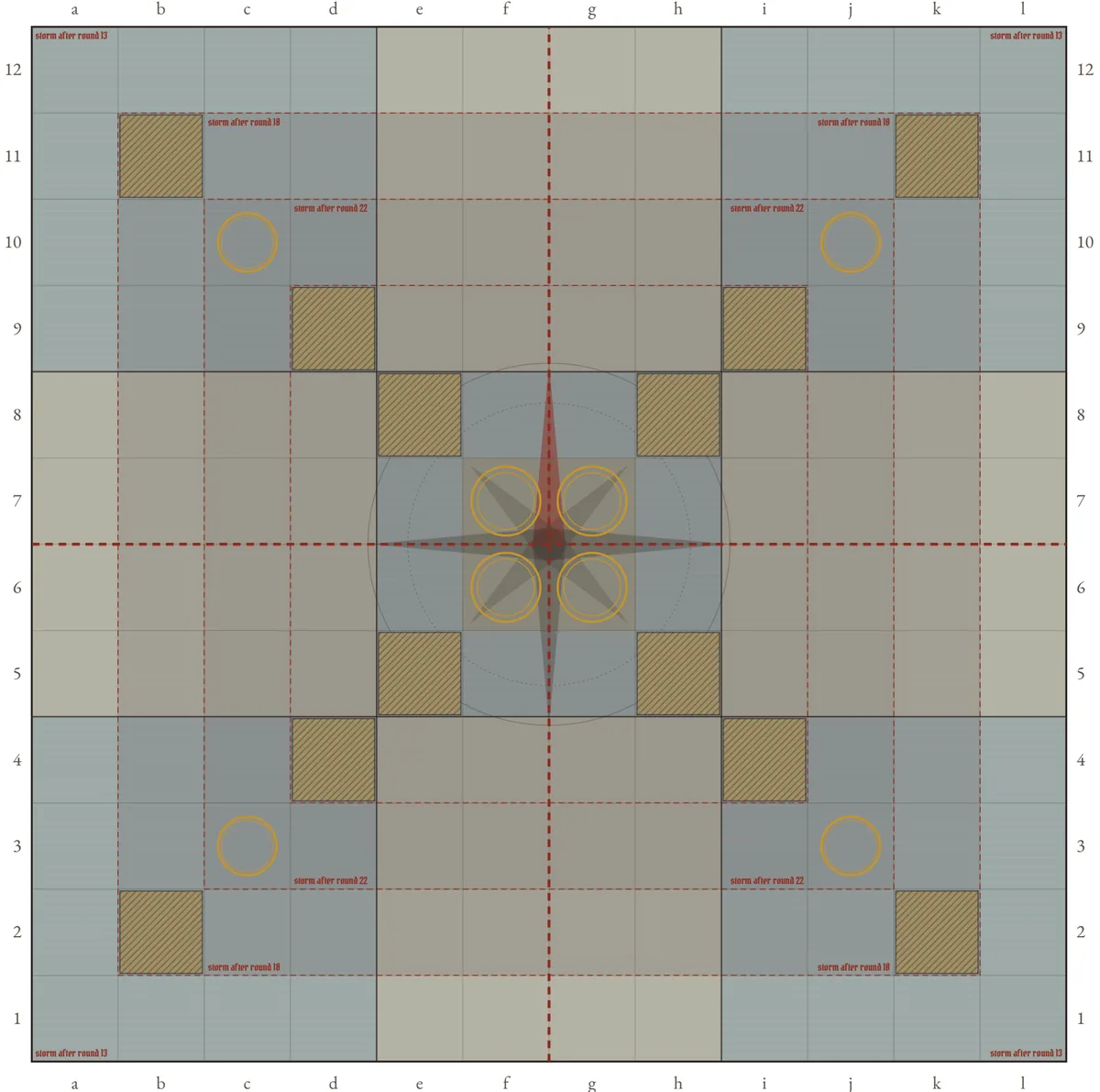
The square chart
Two or four captains
Twelve by twelve. Each fleet starts in a 4 by 4 anchorage in the middle of an edge, with harbors on the corner diagonals between neighbors and a 2 by 2 Capital at the center. Two captains face each other; in pairs, partners sit side by side.
By agreement a fleet may also start in its wings: the 2 by 2 of open water on each side of its anchorage along the edge.
Print the square chart (PDF)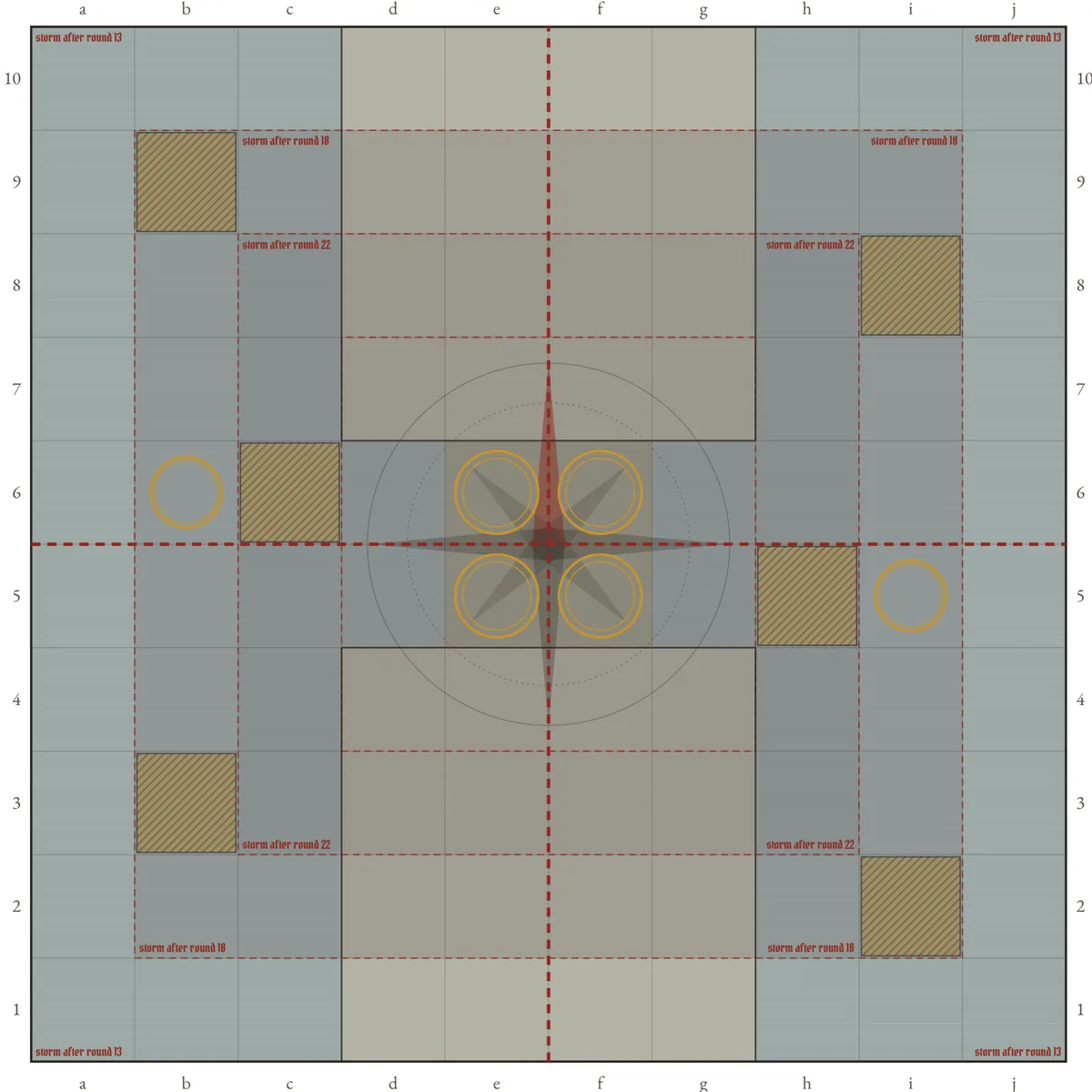
Four rival captains to play.
Played by the computer, from the Deckhand to the Commodore. Each sees only what a captain in that seat would see, never a hidden rating. Choose one when you start a game in your browser.
Deckhand
Gives any legal orders at random, a crew for learning the rules against.
Bosun
Takes the best move it can see each round and plays for points.
Navigator
Reads the log to guess each enemy ship, keeps clear of the storm and plays for points, and either side in Pirates! as well.
Commodore
Reads the log like the Navigator and plays for the chosen ending, hunting Admirals, holding the Capital, guarding its own or raiding as the pirate.
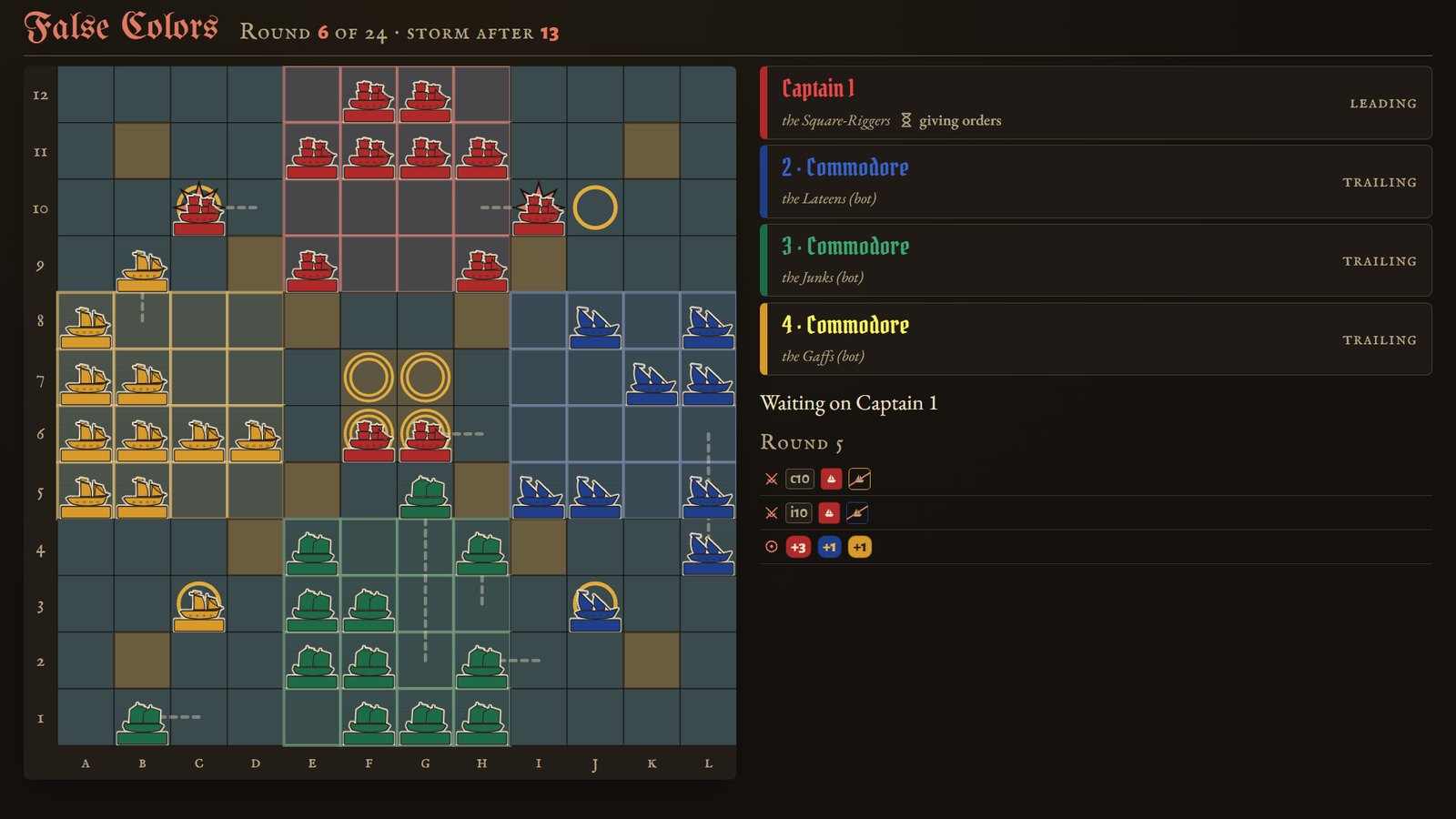
Party mode.
The board on the television, the orders in everyone's pocket.
- Open the party screen in the television's browser. It shows a four-letter code.
- The host types the code on their phone, in the game's Host tab.
- Each captain scans their seat's code from the screen and gives orders from their own phone.
- The television plays every round's replay and keeps the score. It never shows a hidden rating.
Party mode is part of the free digital beta. How to get a table
That is the whole game.
Everything else is reading the water. The full rules settle every corner case, and a rival captain is waiting.